
Confidence Is Part of Personal Safety
When people think about self-defense, they often picture physical techniques first.
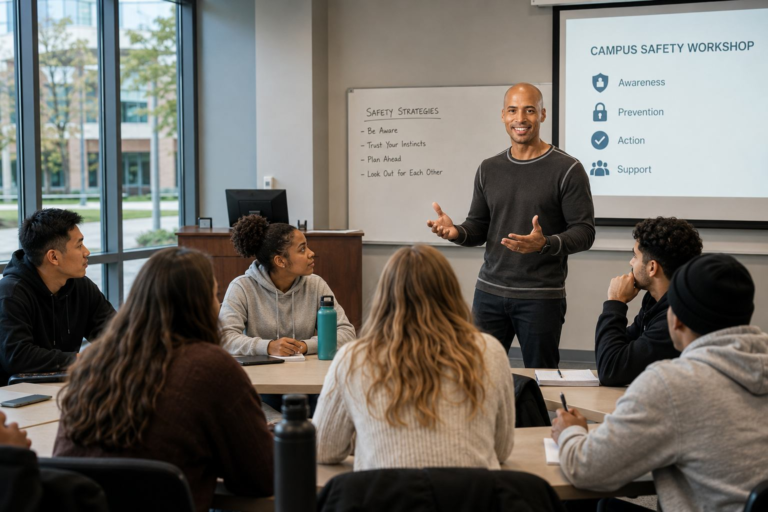
In reality, personal safety usually begins much earlier. It starts with awareness, decision-making, communication, and the ability to trust your instincts when something feels off.
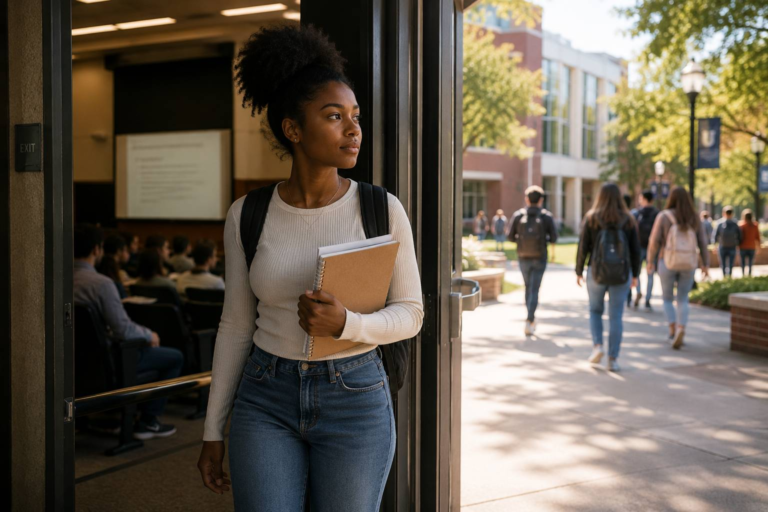
For college students, those moments happen more often than many people realize. New environments, unfamiliar social situations, crowded events, late nights, and increased independence all create situations where confidence and personal boundaries matter.
Strong personal safety skills grow from the belief that your comfort, judgment, and safety deserve attention.
Personal Boundaries Matter
Many uncomfortable situations begin subtly.
Someone ignores personal space. A conversation becomes increasingly intrusive. Social pressure starts building. Verbal cues get dismissed. A person continues pushing after clear discomfort becomes visible.
Students often recognize these moments internally long before they respond externally.
The challenge is rarely awareness alone. The challenge is deciding to act confidently and early.
That action may look like:
- creating distance
- leaving an environment
- speaking more directly
- asking for support
- drawing attention to a situation
- trusting personal instincts sooner
Those responses are skills, and skills improve with practice.
Awareness and Decisiveness Work Together
Campus safety depends heavily on recognizing developing situations before they escalate.
Situational awareness helps students notice behavioral changes, environmental shifts, and social dynamics that deserve attention. Decisiveness helps students respond with clarity rather than hesitation.
Many students spend years learning to prioritize harmony, avoid conflict, and accommodate others socially. Those qualities can be valuable in everyday life. Personal safety situations require a different mindset: valuing your own comfort and acting confidently when boundaries are crossed.
Preparedness supports that transition.
Self-Defense Is About Capability
At Krav Maga Essentials, students learn practical safety concepts designed around real-world situations, awareness, communication, and personal confidence.
The focus extends beyond physical techniques alone. Students develop:
- situational awareness
- stress management skills
- verbal boundary-setting
- decision-making under pressure
- practical self-defense fundamentals
- confidence in unfamiliar environments
Physical skills matter. Mindset matters too.
When students trust their judgment and respond with clarity, they create stronger opportunities to stay safe, leave uncomfortable situations early, and move through college life with greater confidence.
Preparedness begins long before a physical confrontation ever occurs.