
Watch someone who has truly mastered a physical skill.
Nothing looks rushed. Nothing looks forced.
One movement seems to become the next. Weight shifts before the step. The body turns before the arm moves. There
isn’t an obvious moment where one action ends and another begins.
You can see it in an experienced athlete, a dancer, or a tai chi practitioner.
Beginners tend to focus on the individual movements.
Experienced people learn to connect the dots.
That distinction matters in self-defense training, too.
Learning the Pieces Is Only the Beginning
Every physical skill is made up of smaller pieces.
Position.
Movement.
Balance.
Timing.
Recovery.
When you’re first learning, those pieces have to be separated. That’s normal. You learn one movement, stop, think
about the next one, and continue.
Eventually, however, those individual pieces need to become connected.
Otherwise, you haven’t really learned one skill. You’ve memorized a sequence of instructions.
I see this constantly when students practice.
They move.
Stop.
Think.
Move again.
Each individual piece may be technically correct, but there’s hesitation between them.
That’s where the work begins.
Connecting the Dots
I use that phrase constantly:
Connect the dots.
The end of one movement should help create the beginning of the next.
Instead of constantly stopping and rebuilding your position, you begin learning how one action naturally leads into
another.
That’s where efficiency comes from.
And efficiency matters because real-world self-defense doesn’t happen as a neatly organized series of individual
steps.
You may need to recognize a problem, move, communicate, create distance, and get to safety almost continuously.
The individual skills matter.
Learning how they work together matters even more.
Slow Builds Fast
Students naturally want to move faster.
I usually tell them the opposite.
Slow down.
One of my instructors, Alan Feldman, used to tell us to move as though we were moving through molasses.
At the time, I thought of it as an exercise.
It took me years to fully appreciate the lesson.
Moving slowly exposes things speed can hide.
You notice when your balance changes.
You notice unnecessary movement.
You discover where you’re pausing.
You feel when one part of a movement isn’t connecting naturally to the next.
Speed can cover mistakes.
Slow practice makes you confront them.
Once the movement becomes clean and connected, speed can be added naturally.
The Three Words I Say Most Often
After decades of training and teaching, you’d think the corrections I make most frequently would be complicated.
They’re not.
They’re usually these:
Breathe.
Hands up.
Slow down.
That’s it.
Breathe
Stress changes the way people breathe.
Students tense their shoulders, hold their breath, and sometimes work against their own bodies without realizing it.
Breathing helps you stay composed and continue moving.
It’s simple.
It’s also one of the first things people forget when they’re concentrating.
Hands Up
Good positioning gives you options.
Having your hands available can help you communicate, establish boundaries, protect yourself, create space, or
respond if circumstances change.
You shouldn’t have to rebuild your position every time you need it.
Good habits put useful options where you need them.
Slow Down
This may be the hardest one.
People associate speed with effectiveness, so when they’re learning something new, they want to do it faster.
But speed isn’t particularly useful when you’re practicing mistakes.
Slow down enough to understand what you’re doing.
Find the gaps.
Fix them.
Connect the pieces.
Then increase the pace.
This Goes Beyond Physical Technique
“Connecting the dots” isn’t only about movement.
It’s also a useful way to think about personal safety.
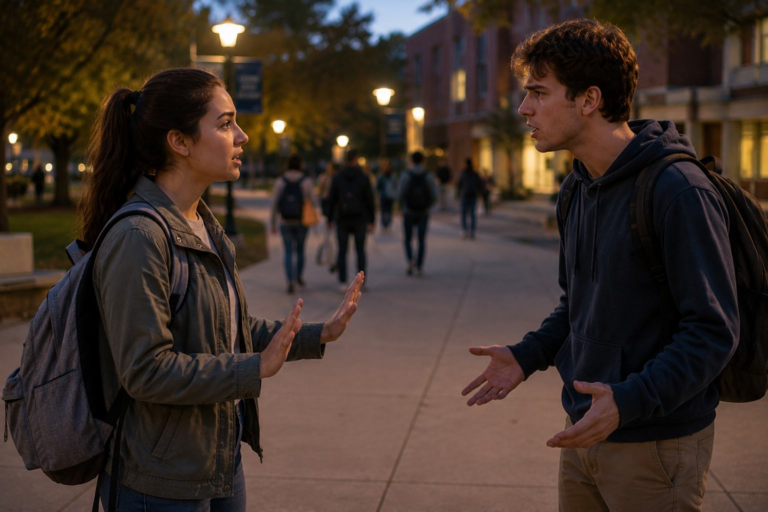
At Krav Maga Essentials, we teach awareness, avoidance, de-escalation, escape, and physical defense.
Those aren’t five completely separate subjects.
They connect.
Awareness may give you an opportunity to avoid a problem.
Recognizing the problem early may give you time to communicate or set a boundary.
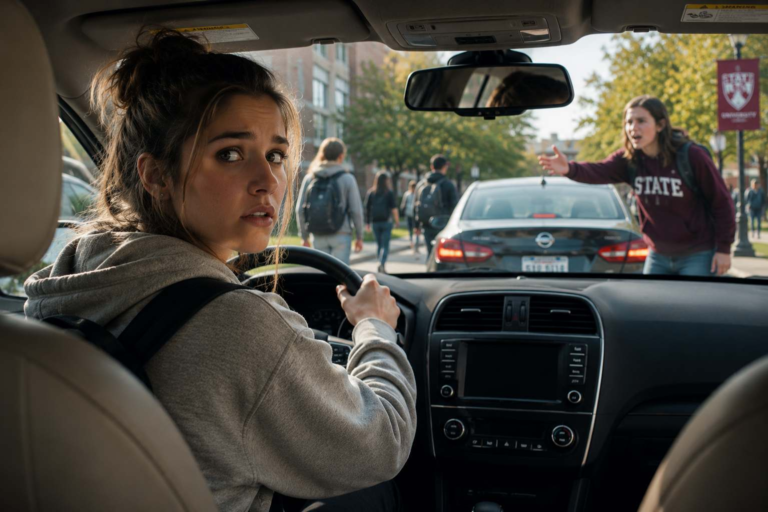
Creating distance may give you an opportunity to leave.
And physical self-defense may become necessary when those earlier options aren’t available or don’t work.
Good student preparedness comes from understanding those connections.
The goal isn’t to collect isolated techniques or memorize a list of safety tips.
It’s to develop habits and skills that support one another when circumstances change.
Build the Skill Before You Test the Speed
There’s nothing particularly exciting about slowing down.
There isn’t much drama in breathing correctly or fixing your position for the hundredth time.
But those small corrections are where reliable skills are built.
So do the repetition.
Move slowly enough to notice what’s happening.
Find the unnecessary pauses.
Make one movement lead naturally into the next.
Then add speed.
You may discover that you didn’t have to manufacture the speed at all.
You simply removed everything that was getting in its way.
Breathe.
Hands up.
Slow down.
Then connect the dots.
Gus Bottazzi
Chief Instructor