
When most people think about personal safety, they picture a dramatic moment.
A stranger. An attack. A crisis that appears without warning.
In reality, many situations that make people feel unsafe begin much earlier.
They often start with small behaviors that are easy to dismiss. A comment that feels uncomfortable. A boundary that gets ignored. A pattern that doesn’t seem serious at first but becomes more concerning over time.
That’s why situational awareness is about more than paying attention to your surroundings. It’s also about paying attention to people and patterns of behavior.
For students heading to college, learning to recognize those patterns can be one of the most valuable personal safety skills they develop.
Most Problems Start Small
Few difficult situations begin at their worst.
Whether it’s a friendship, dating relationship, social group, workplace, or campus organization, concerning behavior often appears gradually.
A person may repeatedly ignore boundaries.
Someone may make comments that leave others feeling embarrassed or uncomfortable.
A friend may use pressure, guilt, or manipulation to get their way.
Individually, these moments can seem minor. Together, they often reveal a pattern.
Recognizing that pattern early gives people more options and more control over how they respond.
Why Small Behaviors Matter
Think of warning signs as information.
They don’t automatically mean someone is dangerous. They don’t mean a situation will escalate.
But they do deserve attention.
Some common examples include:
- Repeatedly ignoring clear boundaries
- Pressuring someone after they’ve said no
- Using embarrassment or humiliation as entertainment
- Dismissing concerns rather than addressing them
- Creating unnecessary drama or conflict
- Using guilt to influence decisions
- Attempting to isolate someone from friends or support systems
The important thing isn’t any single incident.
The important thing is the pattern.
Patterns often tell us more about future behavior than isolated moments.
Situational Awareness Includes People
Many people think awareness means scanning parking lots, walking with confidence, or knowing where exits are located.
Those skills matter.
But awareness also involves understanding interpersonal dynamics.
Who respects boundaries?
Who consistently ignores them?
Who makes you feel supported?
Who regularly leaves you feeling uncomfortable, pressured, or uncertain?
These questions can provide valuable information long before a situation becomes serious.
Personal safety is not just environmental awareness. It’s social awareness too.
Trusting What You’re Noticing
One of the most common mistakes people make is talking themselves out of their own observations.
They notice something feels off, but they immediately explain it away.
Maybe they’re overthinking.
Maybe they’re being unfair.
Maybe it’s nothing.
Sometimes that’s true.
But awareness doesn’t require certainty.
It simply requires paying attention.
Students should feel comfortable acknowledging concerns without feeling obligated to immediately justify them.
Recognizing a pattern early does not mean judging someone. It means gathering information and making thoughtful decisions.
Why We Teach This at Krav Maga Essentials
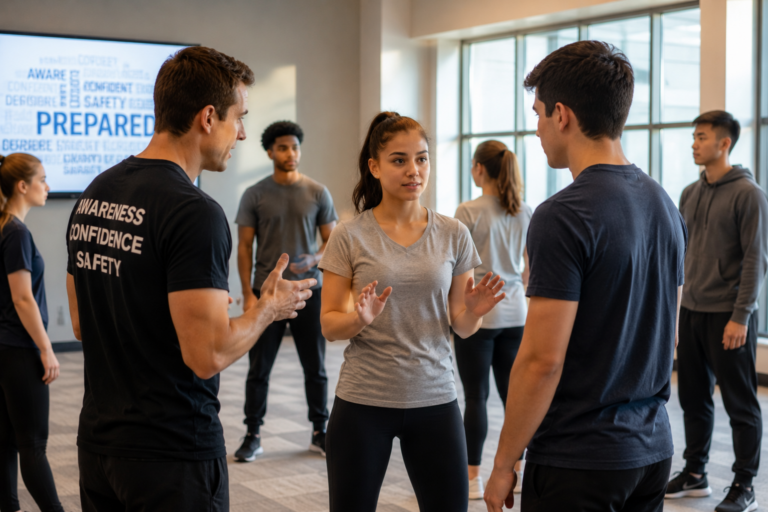
At Krav Maga Essentials, self-defense begins long before physical techniques are ever needed.
We teach awareness, communication, boundary setting, decision-making, and preparedness because those skills help people recognize problems earlier.
Physical self-defense remains an important part of the conversation.
But many situations can be avoided, de-escalated, or exited entirely when people recognize warning signs before they become bigger problems.
The earlier someone identifies a concern, the more options they typically have.
And options are valuable.
Self-Defense Starts Before a Physical Threat Exists
One of the biggest misconceptions about self-defense is that it begins when a confrontation becomes physical.
In reality, self-defense often starts much earlier.
It starts when someone recognizes unhealthy behavior.
It starts when they trust what they’re observing.
It starts when they establish boundaries and act on them.
Preparedness isn’t just knowing what to do during an emergency.
It’s recognizing the moments that happen before one.
Because the most effective personal safety decision is often made long before a physical response is ever necessary.
The Krav Maga Essentials Team