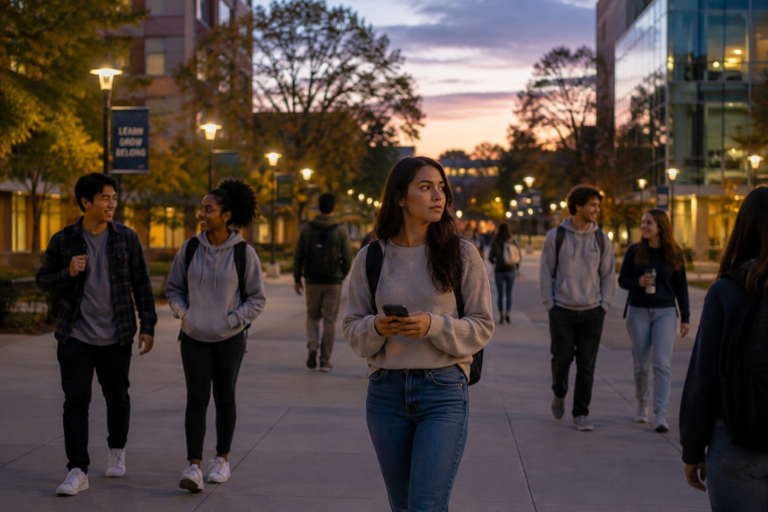

Campus Safety Starts Long Before an Emergency
College campuses are designed to feel open, welcoming, and connected.
Students move between classrooms, dorms, libraries, dining halls, and social spaces throughout the day. That openness creates the atmosphere that makes campus life exciting and memorable. It also makes personal awareness and emergency preparedness an important part of modern student life.
Recent incidents near universities across the country continue to reinforce the same reality: students benefit from understanding how to recognize danger early, respond under pressure, and move decisively during emergencies.
Preparedness creates options. And options create time.
Awareness Changes Everything
During high-stress situations, people naturally look for confirmation before acting.
Students often wonder:
- “Is this real?”
- “Did I hear that correctly?”
- “Why is everyone running?”
- “Should I wait for instructions?”
Situational awareness helps shorten that hesitation.
A rapidly changing environment usually provides signals before clear answers arrive. Crowds moving unexpectedly, alarms sounding without explanation, people suddenly taking cover, locked doors, or unusual silence can all indicate that something serious is happening.
The goal is to recognize that change quickly and begin making decisions immediately.
Understanding Run, Hide, Fight
Many colleges and universities teach the Run, Hide, Fight model because it provides a simple framework during chaotic situations.
Run
Creating distance remains the priority whenever a safe escape route exists. Quick movement and decisive action improve the chances of reaching safety early.
Hide
When escape is unavailable, finding secure cover and creating barriers becomes essential. Students should focus on staying quiet, remaining out of sight, and reducing distractions that could reveal their location.
Fight
Physical resistance becomes an emergency last-resort response when direct danger leaves no path to escape. The objective is disruption and survival long enough to create an opportunity to get away.
The overall priority remains simple: survive and reach safety.
Why Training Matters Under Stress
Stress changes the way the body and mind operate.
Heart rate increases. Focus narrows. Fine motor skills decline. Decision-making speeds up while information processing becomes harder. In unfamiliar situations, many people pause because their brain is searching for a response pattern it has never practiced before.
Training helps build that response pattern ahead of time.
Scenario discussions, mental rehearsal, awareness drills, and stress-management exercises give students a framework they can rely on when pressure rises. Preparation supports faster decisions, clearer movement, and stronger emotional control during emergencies.
Practical Campus Safety Skills Matter Every Day
Emergency preparedness extends beyond rare worst-case scenarios.
The same awareness skills that help students respond during major incidents also support everyday campus safety:
- recognizing developing problems early
- maintaining awareness in unfamiliar environments
- managing stress during fast-moving situations
- making confident decisions under pressure
- communicating clearly during emergencies
Those skills carry into classrooms, parking garages, residence halls, social events, internships, and life beyond college.
At Krav Maga Essentials, students learn practical campus safety concepts designed around awareness, preparedness, and real-world decision-making. The goal is to help students move through college life with greater confidence, stronger situational awareness, and a practical understanding of how to respond when situations become unpredictable.
Preparedness supports confidence. Training supports preparedness.