
Preparedness Starts With Being Able to Move
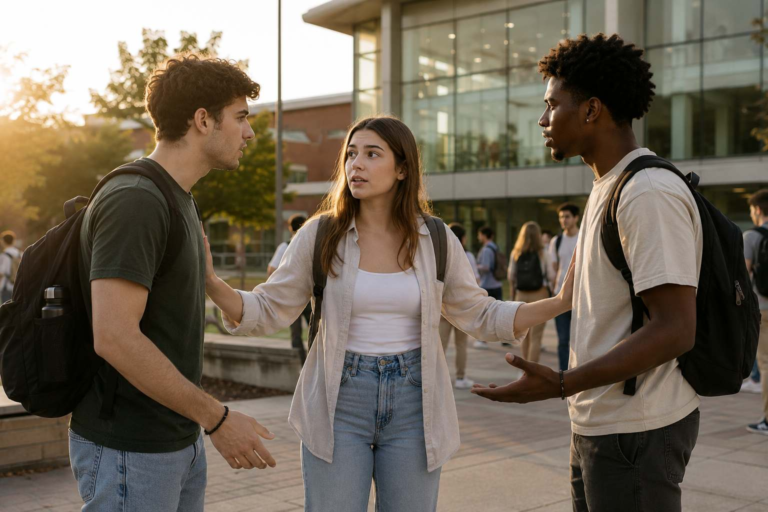
Picture yourself outside a crowded campus event. Someone nearby becomes argumentative, and you decide it is time to go. Your friend is a few steps away. There is an open route toward the building entrance, where staff and other students are gathered.
Recognizing that route is part of situational awareness. Being able to move toward it without stumbling, getting tangled up, or losing your balance is another part of preparedness.
That connection deserves more attention in personal safety education. Students often arrive at a self-defense workshop expecting to learn what to do with their hands. I want them to pay just as much attention to their feet.
Where you stand, how you move, and whether you can change direction all affect the choices available to you. Those details can look ordinary during practice. Under pressure, they become especially useful.
Keep the Opportunity to Leave Available
In self-defense, I want students to remain one moment away from leaving.
That means developing the habit of staying ready to move when an opportunity appears. Perhaps someone steps aside. Perhaps a conversation pauses long enough for you to disengage. Perhaps you notice a clearer route toward other people.
Taking that opportunity requires attention and a body that is ready to follow through.
If your weight has carried you too far forward, you may need to recover before stepping away. If your feet become tangled as you turn, your first movement may be spent sorting yourself out.
College self-defense footwork should help students practice moving, stopping, and changing direction while maintaining their balance. The purpose is practical: make it easier to act on a decision to leave.
Balance Has to Travel With You
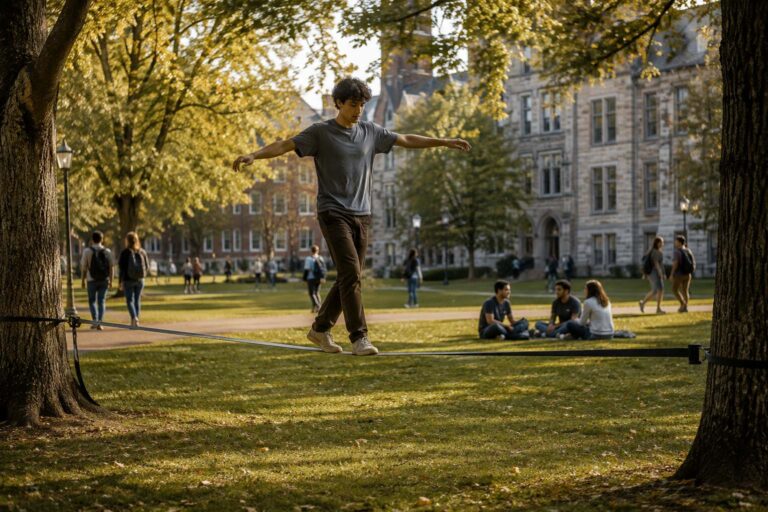
We often picture balance as holding a position without moving. In a self-defense class, I am interested in whether students can carry their balance from one position to the next.
Can you step away and remain steady? Can you turn toward an exit without tripping over your own feet? After a movement, are you ready to move again?
Years ago, one of my judo instructors watched a room full of beginners struggle through a drill and announced that he was going to make us better dancers.
We laughed, but the lesson stayed with me. We were so occupied with the technique that we had overlooked the movement underneath it. Our feet needed an education of their own.
Students recognize this when they slow down enough to notice it. A movement feels awkward. They pause, adjust their footing, and try again. Gradually, the adjustment becomes part of the movement itself.
That is useful progress, even when it produces very little noise.
Give Your Hands a Useful Job
Hand positioning belongs in the same conversation because it affects what you are ready to do next.
During a tense interaction, relaxed, open hands held comfortably in front of the upper body can support a clear verbal boundary. They are also closer to a protective position if the situation changes.
The exact position needs context and practice. Raising your hands should feel natural enough that you can still speak, move, and pay attention. Locked shoulders and rigid arms can make the whole task feel harder.
I encourage students to connect their words, hands, and feet. Practice saying, “I need some space,” while maintaining a comfortable hand position and moving toward a clear route away.
This gives the movement a purpose. You are communicating a boundary while preparing to follow through on it.
No hand position guarantees protection. It is one part of maintaining options, alongside distance, awareness, and the decision to disengage.
Notice What Happens After the Movement
Hitting a training bag provides satisfying feedback. You hear the impact and feel the effort. It is easy to finish a round believing that the hardest strike was the best one.
I ask students to notice the moment immediately afterward.
Where did their weight finish? Did their hands drop? Could they step away smoothly, or did they need to gather themselves first?
Those questions change what students pay attention to. A controlled movement that leaves you steady and ready to leave has practical value.
This also gives beginners something concrete to work toward. They can recognize a smoother step, a more comfortable turn, or the ability to finish an exercise without an extra shuffle to regain balance.
Confidence can grow from those small, observable improvements. Students begin to understand what they can do and what still needs practice.
Bring the Lesson Into Campus Life
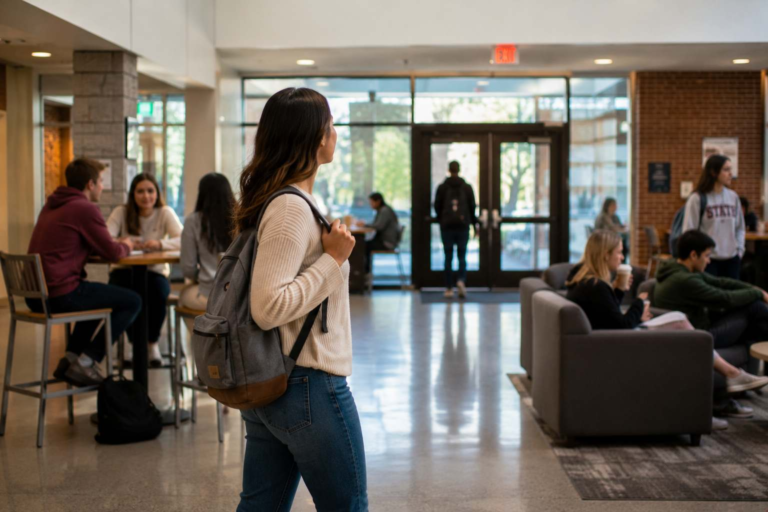
Campus environments give movement a context. Backpacks, crowded doorways, chairs, stairs, and groups of people can all affect the space available.
A useful student preparedness exercise is to notice those conditions before there is any urgency. Where does a walkway narrow? Is your bag sitting where someone could trip over it? If you wanted to end a conversation, which direction offers a clear path?
That is an everyday application of situational awareness: noticing the surroundings well enough to make a practical choice.
In a supervised workshop, students can connect that observation with simple movement practice. Begin slowly, with enough room and clear instructions. Work on staying balanced while stepping away, turning, and stopping. Add complexity as students become comfortable.
The aim is to build a habit that supports a decision: when it is time to go, be ready to go.
Make Readiness Part of Every Repetition
The next time you train, give yourself a simple check at the end of each exercise:
- Am I balanced?
- Are my hands in a useful position?
- Can I see where I would go?
- Can I move without first having to reset?
Bring those questions into each repetition until they become familiar.
Footwork and hand positioning deserve consistent attention because they support the larger purpose of self-defense training: creating an opportunity to reach safety and being prepared to take it.
Practice the step that lets you leave.
Gus Bottazzi
Chief Instructor, Krav Maga Essentials